When it comes to precision navigation, Real-Time Kinematic (RTK) GNSS technology is a game-changer, enabling centimeter-level accuracy for drones, autonomous vehicles, and surveying equipment.
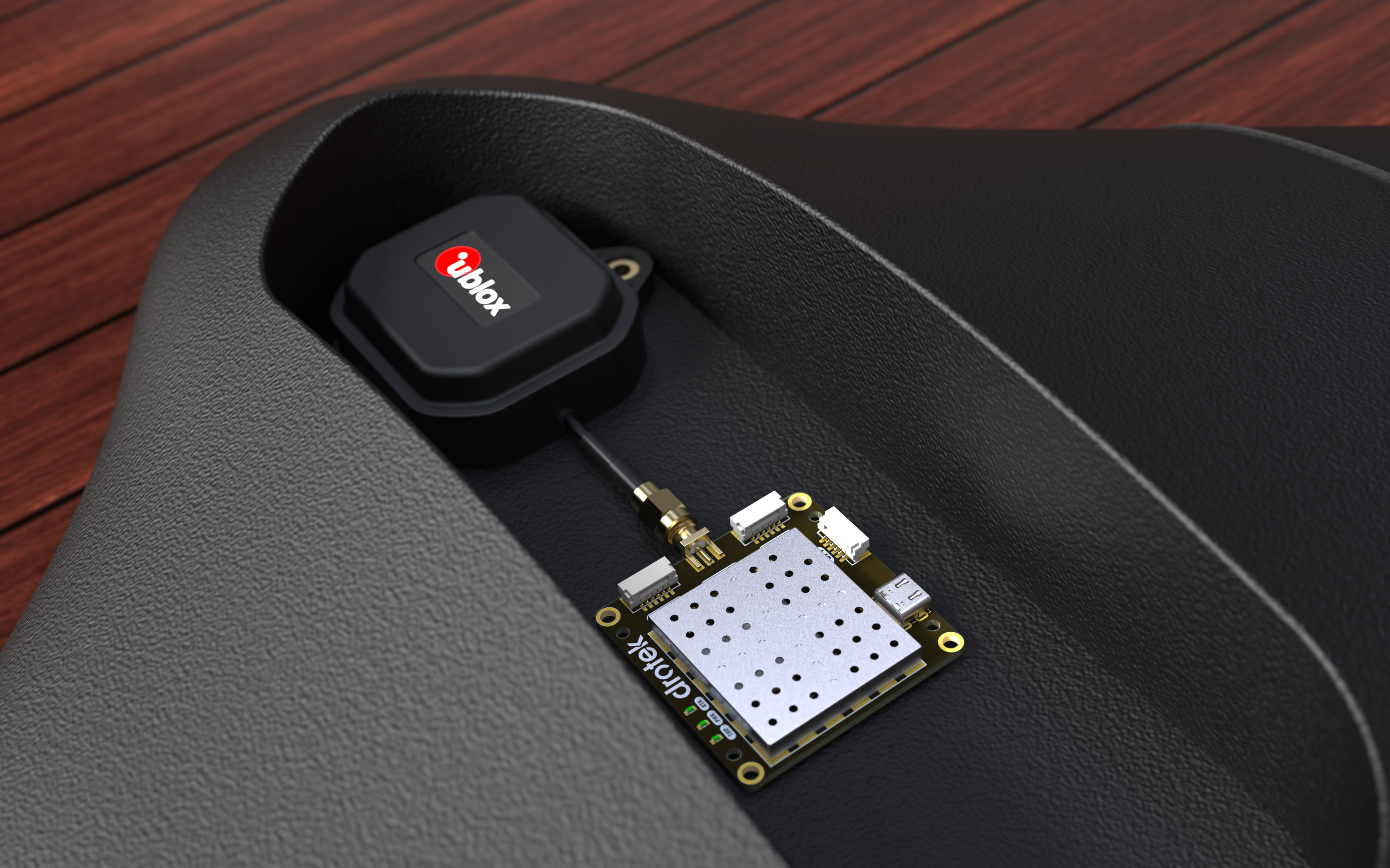
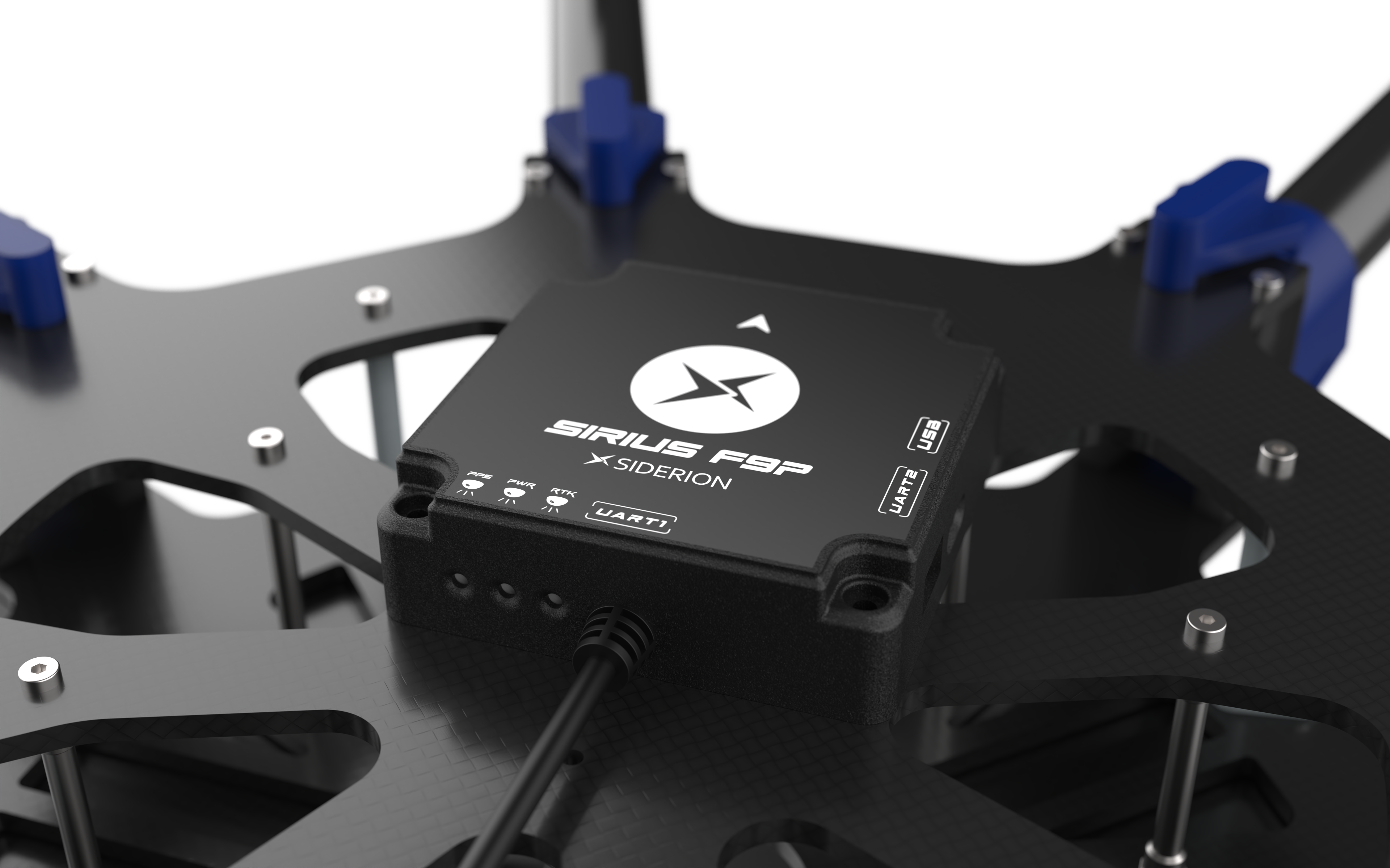
The Siderion Sirius F9P RTK GNSS module, powered by the u-blox ZED-F9P chipset, stands out as a compact, high-performance solution with an embedded active GNSS antenna for professionals who demand reliability and precision. Whether you’re mapping, surveying, or piloting autonomous systems, the Sirius F9P delivers unmatched accuracy, fast convergence, and robust multi-constellation support.
This article explores its technical specifications, use cases, setup, and why it’s a top choice for high-precision applications.

Technical Specifications
Core Features
- Module: u-blox ZED-F9P (multi-band L1/L2 GNSS)
- Accuracy: 1 cm in RTK mode
- Convergence Time: Under 10 seconds
- Update Rate: Up to 20 Hz
- Constellations: GPS, GLONASS, Galileo, BeiDou, QZSS
- Interfaces: UART, I2C, USB (depending on model)
- Antenna: Integrated L1/L2 active patch antenna
- Power: Low power consumption, ideal for battery-powered applications
- Form Factor: Compact (75x75x22mm), plug-and-play design with JST-GH connector for easy integration with autopilots like Pixhawk.

Why Multi-Band Matters
The ZED-F9P’s multi-band (L1/L2) capability significantly reduces ionospheric interference, a common source of error in single-band GNSS systems. This results in faster, more reliable RTK fixes, even in challenging environments like urban canyons or dense foliage.
Key Advantages
1. Centimeter-Level Accuracy
The Sirius F9P provides 1 cm positional accuracy in RTK mode, making it ideal for applications where precision is critical, such as:
- Drone surveying and mapping
- Autonomous vehicle navigation
- Precision agriculture
- Construction and land surveying
- Robotics and industrial automation.
2. Fast Convergence and High Update Rate
With a convergence time under 10 seconds and a 20 Hz update rate, the F9P ensures real-time, responsive positioning—essential for dynamic applications like drone flight or fast-moving rovers.
3. Robustness in Challenging Environments
- Anti-jamming and spoofing detection: Advanced features protect against signal interference, ensuring reliable operation in high-risk areas.
4. Integration with Magnetometers
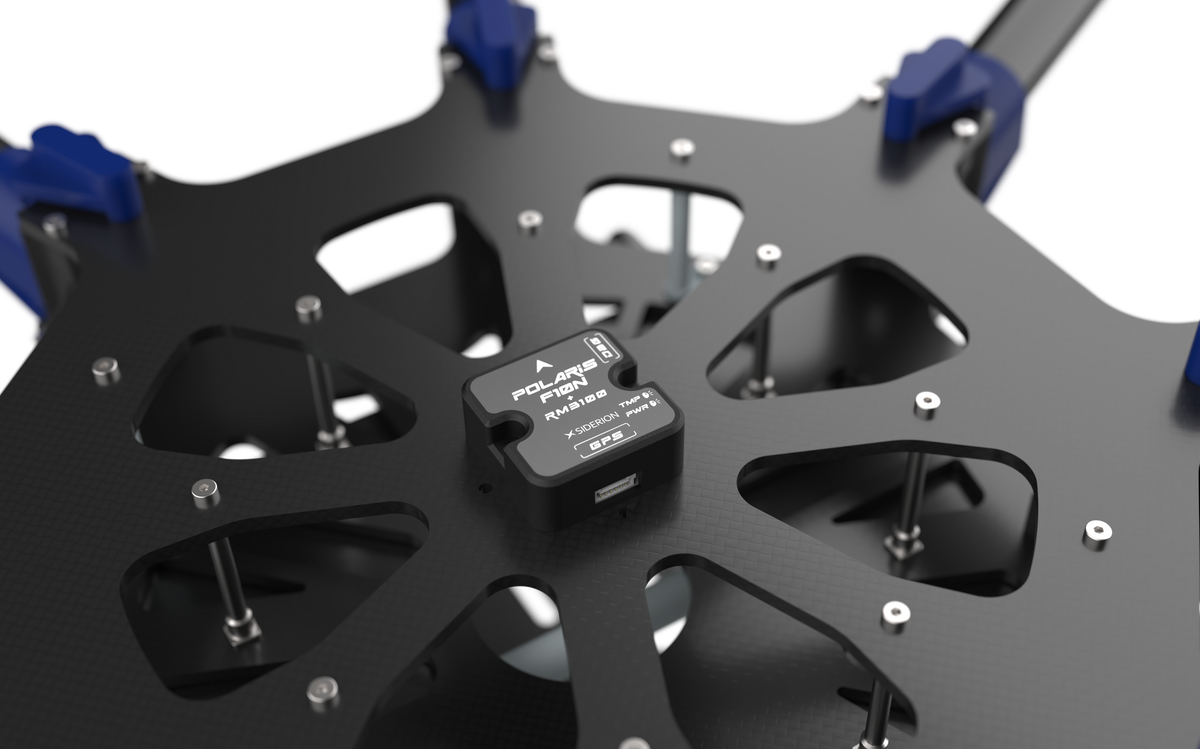
The Sirius RTK GNSS Rover (F9P + RM3100) combines the F9P with Siderion’s RM3100 magnetometer, eliminating magnetic interference from motors and metal parts. This integration delivers stable heading and orientation, crucial for autonomous navigation and waypoint following.
Use Cases
Drones and UAVs
- Precision mapping and photogrammetry: Achieve survey-grade accuracy for 3D modeling, agriculture, and infrastructure inspection.
- Autonomous flight: Enable reliable waypoint navigation, even in GPS-denied environments.
- Moving base applications: The F9P supports moving base RTK, allowing drones to follow moving targets or land on mobile platforms.
Surveying and GIS
- Land surveying: Replace traditional total stations with RTK GNSS for faster, more efficient data collection.
- Construction layout: Stake out points with centimeter precision, reducing errors and rework.
Autonomous Vehicles
- Self-driving cars and robots: Provide high-accuracy localization for path planning and obstacle avoidance.
- Industrial automation: Guide AGVs (Automated Guided Vehicles) in warehouses or manufacturing plants.
Scientific Research
- Environmental monitoring: Track assets or collect geospatial data in remote or harsh conditions.

Setup and Integration
Hardware Setup
- Rover Mode: Connect the Sirius F9P to your autopilot (e.g., Pixhawk 3 PRO) via the JST-GH connector. The module is plug-and-play with most PX4/ArduPilot systems.
- Base Mode: The Sirius F9P can be used as a standalone base station, providing RTK corrections to one or more rovers.
Software Configuration
- Firmware: Use u-center (u-blox’s GNSS evaluation software) to configure the module, update firmware, and monitor performance.
- RTK Corrections: Transmit RTCM3 messages from the base to the rover via radio telemetry, cellular, or LoRa.
- Calibration: Calibrate the integrated RM3100 magnetometer (if present) using QGroundControl or Mission Planner for optimal heading accuracy.
Example PX4/ArduPilot Setup
- Connect the F9P to your flight controller’s GPS port.
- Configure the autopilot to use RTK GPS and external compass (RM3100).
- Perform a GNSS survey-in for the base station (if applicable).
- Verify RTK fix status in your ground control station (e.g., QGroundControl).
Tips for Best Performance
- Sirius F9P Placement: Mount the Sirius F9P away from sources of interference (motors, metal, electronics).
- Base Station Setup: For maximum accuracy, place the base station on a known coordinate or perform a survey-in.
- Power Management: Use a stable power supply to avoid voltage drops, which can disrupt RTK fixes.
Real-World Performance
In field tests, the Sirius F9P consistently achieved 1 cm accuracy within seconds, even in urban environments with significant multipath interference. The addition of the RM3100 magnetometer further improved heading stability, reducing drift during aggressive maneuvers—critical for drone operations

Conclusion
The Siderion Sirius F9P RTK GNSS module is a high-performance, reliable solution for anyone needing centimeter-level precision with onboard GNSS active patch antenna. Its multi-band support, fast convergence, and seamless integration with drones and autonomous systems make it a top-tier choice for professionals. Whether you’re surveying, mapping, or developing autonomous vehicles, the Sirius F9P delivers the accuracy and robustness required for mission-critical applications.