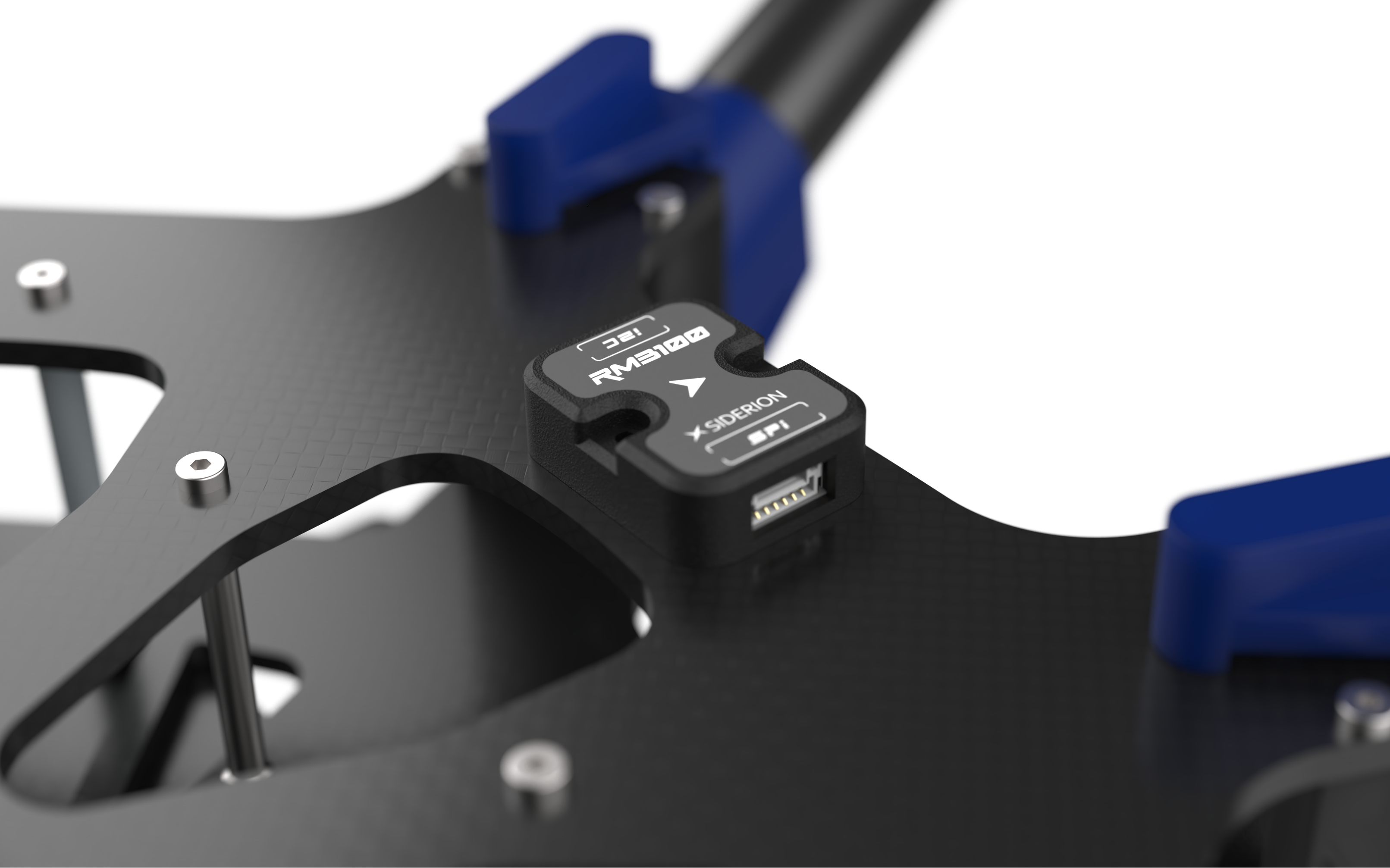
In the world of drones, UAVs, and autonomous systems, accurate heading and orientation are critical for safe and reliable operation. Traditional internal magnetometers often struggle with interference from motors, metal parts, and electronic noise, leading to inaccurate readings and drift. Enter the Siderion RM3100 Professional Grade Magnetometer—a high-precision, low-noise sensor designed to eliminate these challenges and provide unmatched accuracy for heading and orientation calculations.
This article will dive into its technical specifications, real-world applications, setup, and why it stands out in the crowded field of magnetometers.

Technical Specifications
The RM3100 is built on PNI’s magneto-inductive technology, which sets it apart from traditional Hall-effect sensors. Here’s what makes it exceptional:
- Resolution: 10 nT (nanotesla), offering 23× better resolution than standard sensors.
- Noise Floor: Ultra-low, with 33× less noise, ensuring stable and precise measurements.
- Power Consumption: Minimal, making it ideal for battery-powered applications.
- Hysteresis: None, meaning no lag or memory effect in readings.
- Interfaces: Supports both I2C and SPI, for flexible integration.
- Dynamic Range: Large, with high sampling rates and immunity to signal noise.
- Environmental Stability: Measurements remain stable over temperature and are free from offset drift.
These features make the RM3100 the go-to choice for applications requiring high accuracy, stability, and reliability, from drones and robotics to aerospace and scientific research.

Why Choose the RM3100?
1. Noise Elimination and Accuracy
The RM3100 is designed to eliminate noise in magnetic field measurements, which is a common issue with internal magnetometers. Its external placement and advanced technology allow it to provide a clean heading reference, even in environments with significant electromagnetic interference—such as near motors or metal structures.
2. Use Cases
- Drones and UAVs: Provides a stable heading reference for autonomous navigation, waypoint following, and GPS-denied environments.
- Robotics: Ideal for robots requiring precise orientation and movement control.
- Aerospace: Used in satellite systems, deep-space exploration, and defense applications for its reliability and precision.
- Scientific Research: Perfect for geomagnetic studies, space weather monitoring, and environmental sensing.
3. Performance Comparison
In independent tests, the RM3100 outperformed popular alternatives like the ST LIS3MDL, showing 7.5× less noise and far greater stability, especially under high-throttle conditions.

Setup and Integration
Hardware Setup
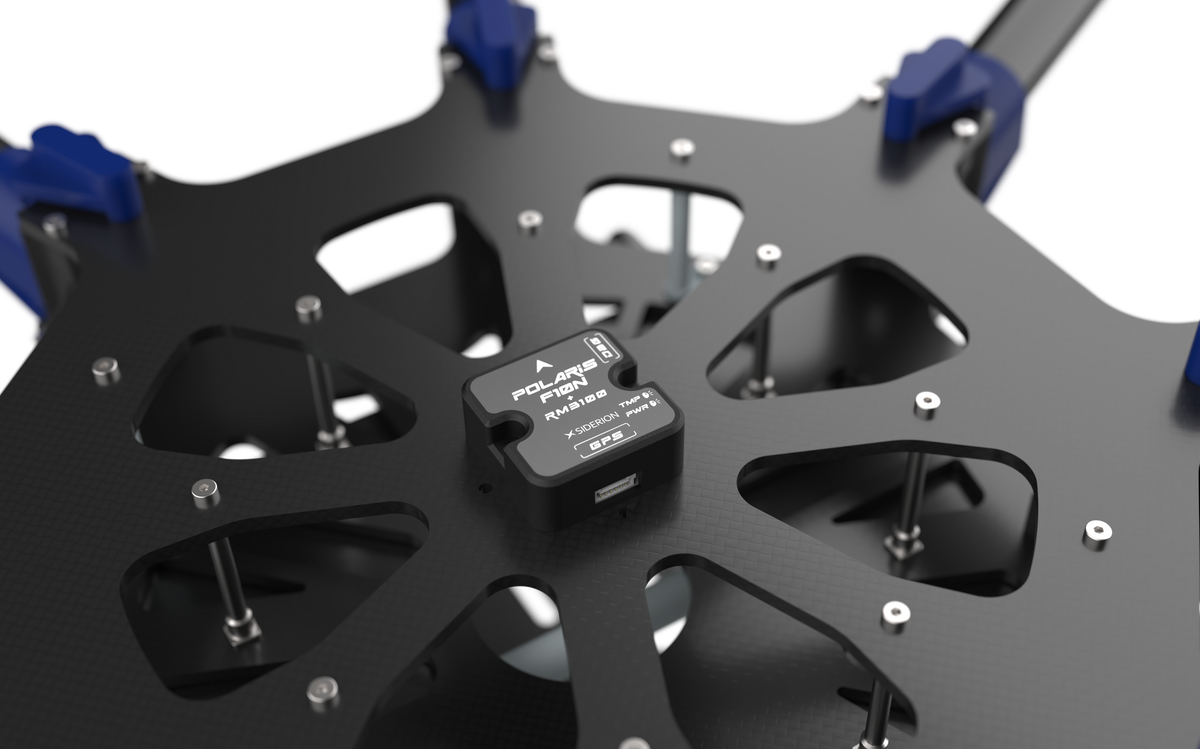
- Connections: The RM3100 is available in modules with JST-GH connectors or as a breakout board for custom integration.
- Placement: Mount the sensor away from sources of magnetic interference (motors, power lines, metal frames) for optimal performance.
- Interfaces: Choose between I2C or SPI based on your system requirements. The sensor is compatible with most flight controllers and microcontrollers, including Arduino and Raspberry Pi.
Software Integration
- Calibration: Rotate the sensor in all directions to map the local magnetic field. Use software tools (e.g., QGroundControl, ArduPilot) to compute calibration parameters.
- Data Acquisition: The RM3100 outputs digital data, so no analog-to-digital conversion is needed. Libraries and example code are available for Arduino, Raspberry Pi, and other platforms.
Tips for Best Results
- Keep cable lengths short to minimize interference.
- Use a non-magnetic, non-metallic mount.
- For drones, place the sensor on a boom or wing, away from the main body.
Pros and Cons
| Pros | Cons |
| Ultra-high resolution and low noise | Slightly higher cost than basic sensors |
| No hysteresis or drift | Requires careful placement to avoid interference |
| Easy integration with common platforms | External mounting may add complexity to some setups |
| Stable in high temperatures |
Real-World Example: Drone Navigation
In a recent project, integrating the RM3100 into a drone’s autopilot system resulted in dramatically improved heading accuracy, especially during high-throttle maneuvers. The drone was able to maintain a stable course through waypoints, even in areas with significant magnetic disturbance—something internal magnetometers struggled with.

Conclusion
The Siderion RM3100 is a standout sensor for anyone needing precise, reliable magnetic field measurements. Its combination of high resolution, low noise, and ease of integration makes it a top choice for professionals and hobbyists alike. Whether you’re building a drone, a robot, or a scientific instrument, the RM3100 delivers the performance you need to succeed.